
When Your Heart Feels a Little Bruised
We live in a world that tells us to “follow your heart,” but let’s be real — sometimes our hearts lead us straight into trouble. One day you’re feeling hopeful and inspired, and the next you’re overwhelmed, hurt, or drained. Life — and people — can be hard on your heart.
That’s why Proverbs 4:23 feels like a loving piece of advice straight from God’s heart to ours: “Above all else, guard your heart.” It’s not about building walls or shutting people out — it’s about protecting the place where your emotions, thoughts, and faith take root.
The Overflowing Cup
Think of your heart like a cup of water. When life shakes you — because it always does — whatever is inside spills out. If your heart is full of peace, that’s what overflows. But if it’s filled with resentment, worry, or bitterness, that’s what others will feel, too.
Guarding your heart means being intentional about what you let pour in, because everything you do and say flows from it.
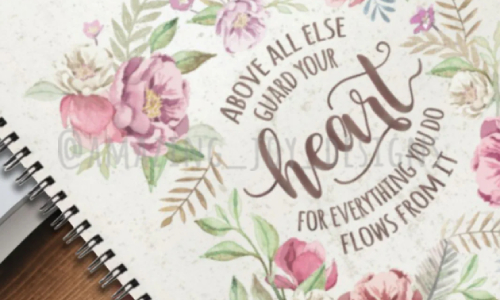
“Above all else, guard your heart, for everything you do flows from it.”
What It Really Means to “Guard Your Heart”
In the Bible, the heart represents more than feelings — it’s the center of your mind, will, and soul. To guard your heart means to watch carefully what influences you, what you dwell on, and what you allow to take root.
It’s easy to underestimate how much the things we watch, listen to, and think about shape our spirit. God calls us to be aware of what feeds or drains our inner peace. Guarding your heart isn’t fear-based — it’s wisdom-based. It’s choosing what deserves your energy and what doesn’t.
How to Protect Your Heart Without Closing It:
So how do we put this into practice?
- Set healthy boundaries. Saying “no” sometimes is holy. Protect your peace by not overcommitting or tolerating what consistently hurts you.
- Filter your inputs. Be mindful of what you watch, read, and scroll through. Ask: “Does this feed my soul or drain it?”
- Spend time with God daily. Prayer, worship, or quiet reflection fill your heart with the right kind of strength.
- Release bitterness. Forgiving doesn’t mean forgetting — it means freeing your heart from the weight that keeps it from loving fully.
Taylor Swift’s Lessons in Self-Protection
Singer-songwriter Taylor Swift has lived much of her life in the public eye — and learned, often the hard way, how to guard her heart. She’s spoken about finding balance between vulnerability and boundaries, especially after facing public criticism and personal heartbreak.
In an interview, she once said, “I’ve learned that protecting your peace doesn’t make you cold — it makes you wise.”
While her context is different, the wisdom echoes Proverbs 4:23. Guarding your heart isn’t about shutting the world out; it’s about knowing who and what gets to influence your inner world.
Remember: Your heart is precious — it is the wellspring of your thoughts, feelings, and choices. So treat it with care. Fill it with truth, feed it with kindness, and keep it open to God’s guidance.
When you guard your heart with wisdom, you make room for love, peace, and joy to flow freely through everything you do.
Protecting your heart isn’t selfish — it’s sacred.
Journaling Prompts
- What drains my heart the most lately, and how can I set better boundaries around it?
- Who or what consistently brings peace and joy to my heart, and how can I nurture that more?
- What influences — media, habits, or relationships — do I need to filter or release?
- How can I make space for God to renew and refill my heart daily?
